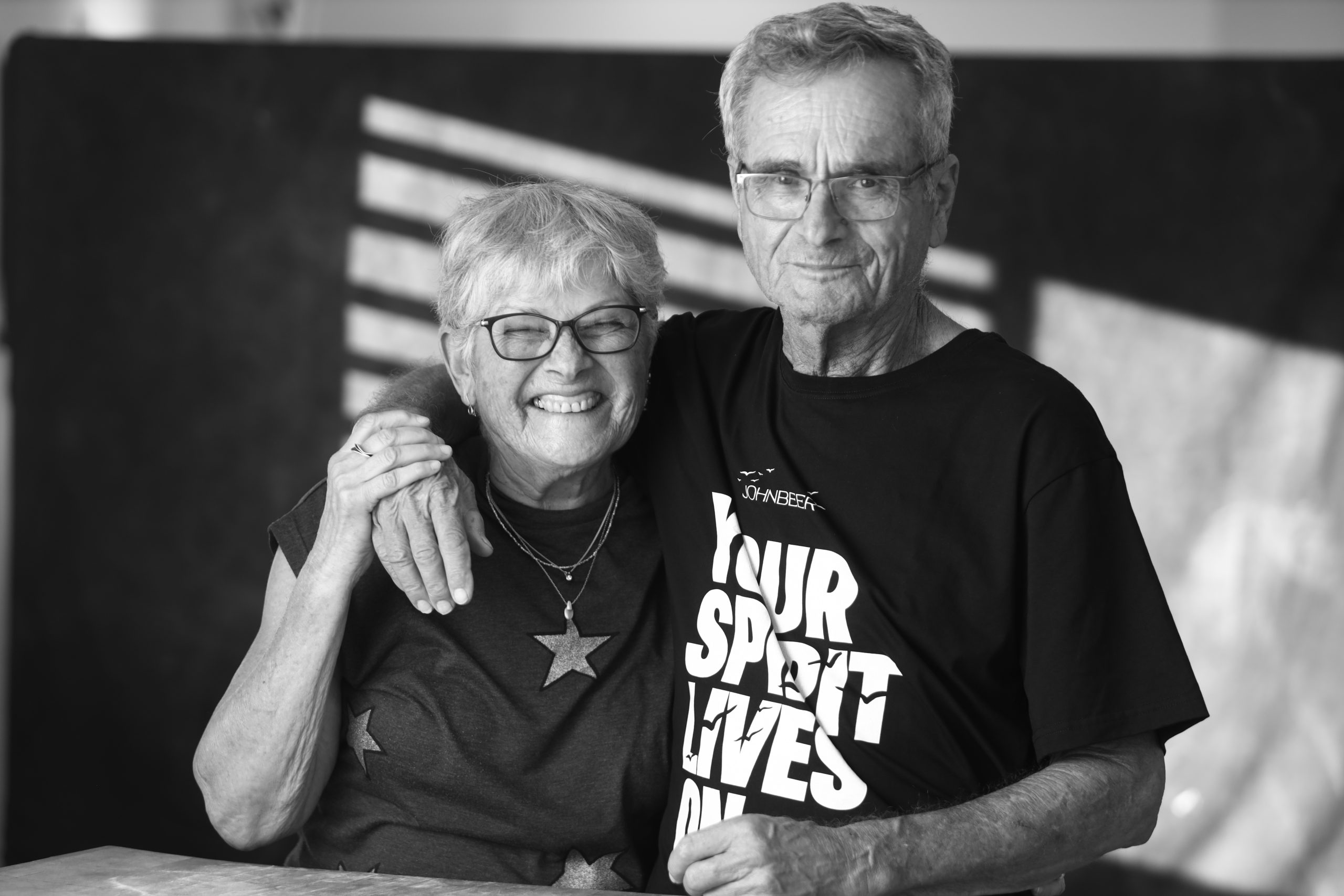


Here lived
Chaya and Avi Kingbeil lived here. I (Avi) came to Nir Oz in 1963, with the kibbutz’s second Garin group, and Chaya came to Nir Oz in 1969, with the fourth Garin group. Over the years, we had three daughters and then our youngest son.
We lived in several houses on the kibbutz, until we moved to our current home of 43 square meters. We moved with our neighbors, the Zilberman family, and lived in our home for more than 30 years. While living here, the kibbutz changed to a family sleeping arrangement (in which children slept in their parents’ house instead of the children’s house). Our son Eshchar slept with us for two years. Over the years, the house was immersed in lush greenery and looked almost like a jungle. We were happy to host the entire tribe, all 18 of them.
Avi worked for years in agriculture, kibbutz management, and at the Nirlat Factory.
Chaya served over the years as a treasurer, as quality manager at Nirlat, and was in charge of the kibbutz’s cultural activities.
In recent years, after retiring, we’ve maintained an independent and healthy lifestyle.
October 7th
On October 7, 2023, we woke up at 6:30 a.m. to the sound of the sirens. We moved slowly, boiled water for coffee, and prepared to move into the safe room.
We heard shooting in the backyard and shouting in Arabic. We saw Ditza Haiman running on the path, screaming for help, as three strangers ran after her. It was then that we realized that this wasn’t an ordinary event. I (Avi) took the gun out of the safe, ran outside, and approached the path. About 10-15 terrorists gathered near the home of Amiram and Nurit Cooper.
I saw the Coopers forced out of their home. Shooting with a pistol isn’t precise, but given how crowded it was, I had a clear shot. I fired three shots, then lay down on the ground under the lemon tree in front of our house.
The terrorists identified the source of the gunfire and shot dozens of bullets. The bullets ripped through the cacti in front of the house, scattering a cloud of leaves and knocking lemons from the tree. Chaya, who had followed the events from our house, ran outside and forced me back into the house.
We went inside our home, locked the door of the room connected to the safe room, and locked ourselves inside the safe room. Immediately, a barrage of gunfire hit the safe-room window. We heard them talking loudly near the window of our safe room.
We stayed inside the safe room. Our only connection with the outside world was through our mobile phones. I realized we had been conquered. At 10:30 a.m., there was a sort of quiet around us. I loaded the gun, and we left the safe room. We were astonished to discover that the terrorists had broken the back door, forced their way into our home, turned it upside down, searched for valuables, and left. We went back to the safe room and waited until 6:30 p.m., when the Shayetet unit arrived and knocked on our door. We spent the night in the fortified children’s house, where the kibbutz members had gathered.
The next day, we were allowed to return to our home and pack a suitcase before heading into exile at a hotel in Eilat. We were given only minutes to pack. We didn’t know how long we would stay in Eilat and when we’d be able to return home.
That afternoon, four buses left Nir Oz and headed for Yam Suff Hotel in Eilat. We got off the bus at Tlalim Junction, where a ride was waiting to take us to Dovrat, where Shachaf, our daughter, lives.
What Happened Since
After about two-three weeks in Dovrat, we moved to the hotel in Eilat. After three more weeks, Avi returned to Nir Oz to help with its restoration. Chaya, who was involved in elder care and cultural activities, stayed at the hotel with other members of the community.
Kibbutz Nir Oz was the first of the evacuated kibbutzim to sign with Tkuma and move to rented apartments in Karme Gat. Today we divide our time between the kibbutz and Karme Gat.